
MONTGOMERYVILLE, Pa., November 20, 2026 — Desilube Technology, Inc. today published maximum treat rates, NSF registration numbers and four-ball test data for its three EP/AW lubricant additives on the EU Lubricant Substance Classification list (LuSC list): Desilube 88, Desilube 98F and Desilube 99FEL. All three appear as extreme-pressure and anti-wear additives in the LuSC list version of 21 May 2026, and all three are NSF HX-1 registered for use in food-grade lubricants.
Why the LuSC listing matters to formulators
The LuSC list supports the EU Ecolabel criteria for lubricants (Commission Decision (EU) 2018/1702). It records additives and other substances that have already been assessed against the Ecolabel’s biodegradability and aquatic toxicity requirements, together with the maximum treat rate allowed in an Ecolabel lubricant. A formulator who stays within those limits can rely on the existing assessment for that additive, which simplifies the documentation for EU Ecolabel and environmentally acceptable lubricant (EAL) programs.
Maximum treat rates for Desilube additives
Limits from the LuSC list (version 21 May 2026). The list sets separate limits for accidental-loss, partial-loss and total-loss lubricants, and for greases and other lubricants.
| Product | Greases (all loss categories) | Other lubricants | NSF HX-1 registration |
|---|---|---|---|
| Desilube 88 | 3.3% | 3.3% | No. 172211 |
| Desilube 98F | 10% | 5.0% accidental loss, 10% partial loss, 3.6% total loss | No. 172212 |
| Desilube 99FEL | 7.0% | 7.0% accidental and partial loss, 5.3% total loss | No. 172213 |
The full table, with every loss category, is on the new LuSC-listed additives page.
Performance at Ecolabel-compatible treat rates
In Desilube’s four-ball tests (ASTM D2596), adding 1.5% Desilube 88/98F raised the weld load of a lithium grease from 160 kgf to 500 kgf, compared with 250 kgf for the same grease with 3% MoS2. The load wear index rose from 18 to 75 and the wear scar (ASTM D2266) fell from 0.80 mm to 0.39 mm. At 3%, Desilube 88/98F also took a food-grade aluminium complex grease from 120 kgf to 500 kgf. All of these treat rates are within the LuSC limits above.
Additive response depends on the base stock, thickener and the rest of the formulation, so these results indicate performance and are not guaranteed values.
Food-grade and Ecolabel from one additive
Because Desilube 88, 98F and 99FEL are both NSF HX-1 registered and LuSC-listed, a formulator can use the same EP/AW additive in an H1 food-grade grease and in an EU Ecolabel or EAL product. The registrations can be checked in the NSF White Book listing for Desilube, and the current LuSC list is published through the EU Ecolabel lubricants page.
Availability
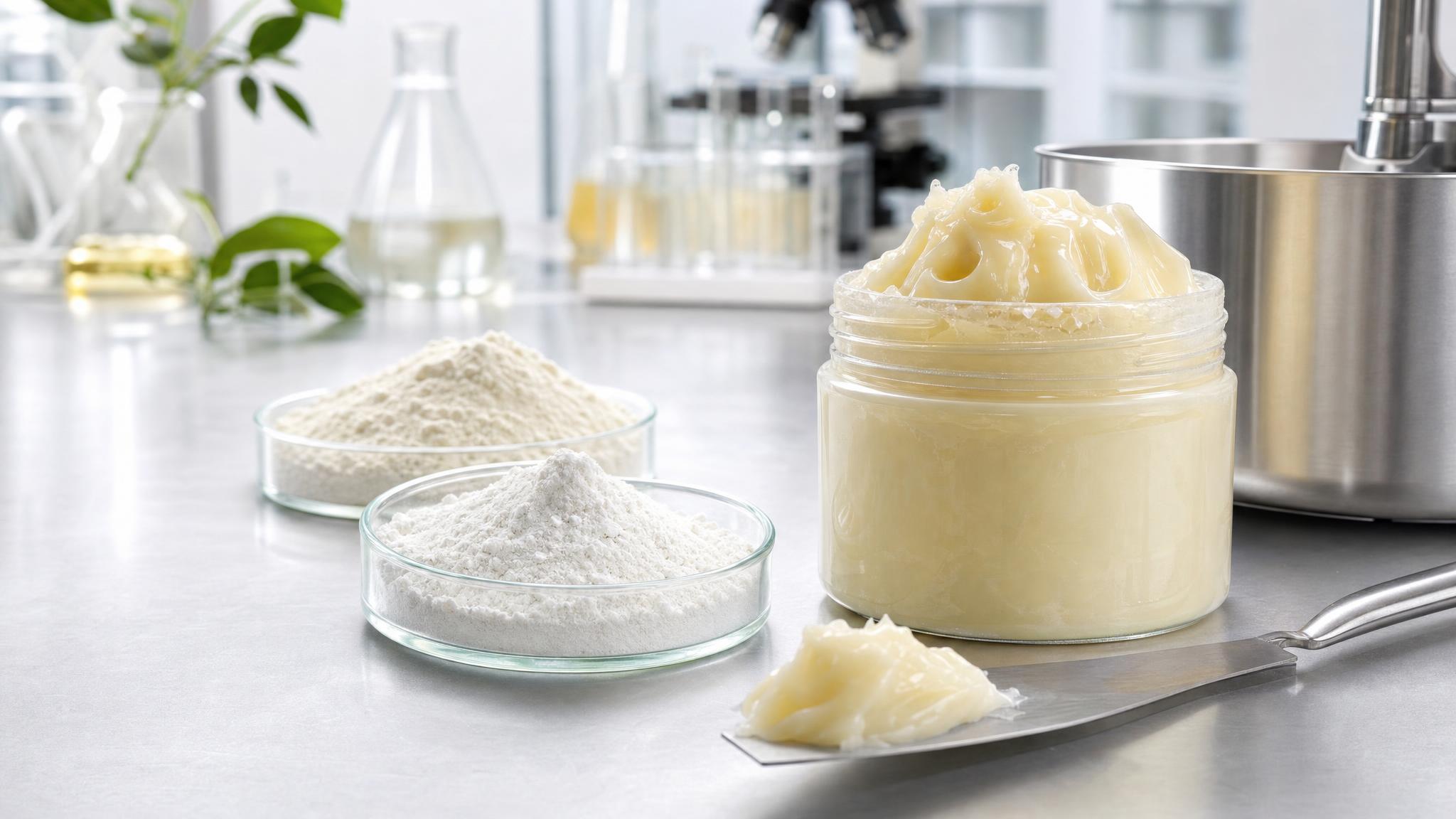
- Desilube 88 and 98F: white, free-flowing powders in 91 kg (200 lb) fiber drums. Recommended dosage 1–15% by weight.
- Desilube 99FEL: NSF HX-1 registered EP/AW additive package for food-grade greases and lubricants.
- Samples, technical data sheets and safety data sheets are available on request, and Desilube’s laboratory runs four-ball EP and wear tests (ASTM D2596, D2266, D4172) on customer formulations.
About Desilube Technology, Inc.
Desilube Technology, Inc., based in Montgomeryville, Pennsylvania, develops and manufactures EP/AW/AF lubricant additives for grease, metalworking fluid and industrial lubricant manufacturers. Its portfolio includes NSF HX-1 registered food-grade additives, LuSC-listed additives for EU Ecolabel and EAL formulations, the lignin-based Desilube AEP, and organoclay rheology additives. Desilube’s sister company, Powderful Solutions, supplies WS2, MoS2 and hBN solid lubricant powders and dispersions.
Contact
Desilube Technology, Inc.
120B Keystone Drive, Montgomeryville, PA 18936, USA
+1 267-685-6505 · gdil@desilubeinc.com
Request a sample or technical consultation